By Zhang Fuyi, FUJI Energy · Fuji Energy Technology Co., Ltd.
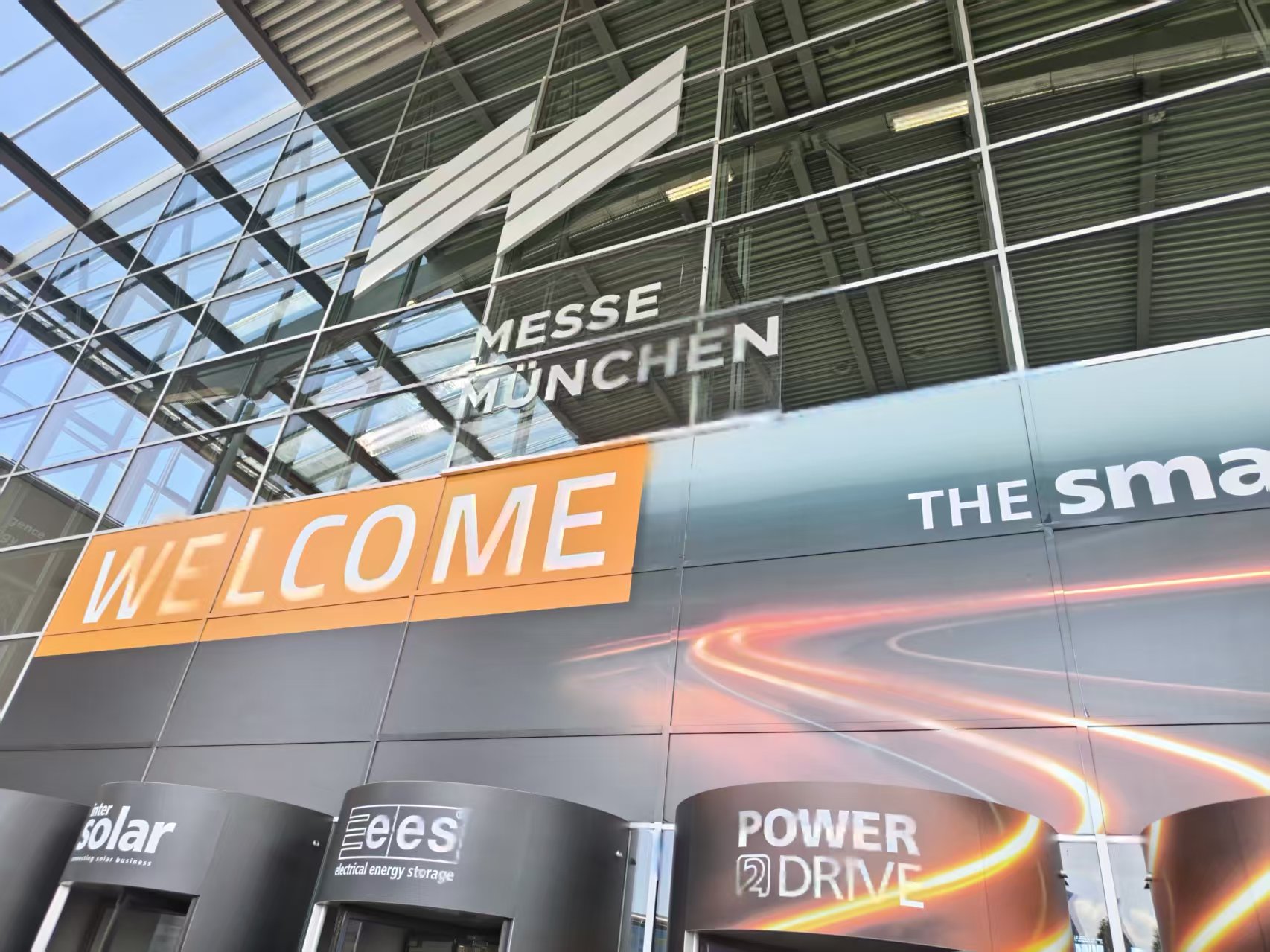
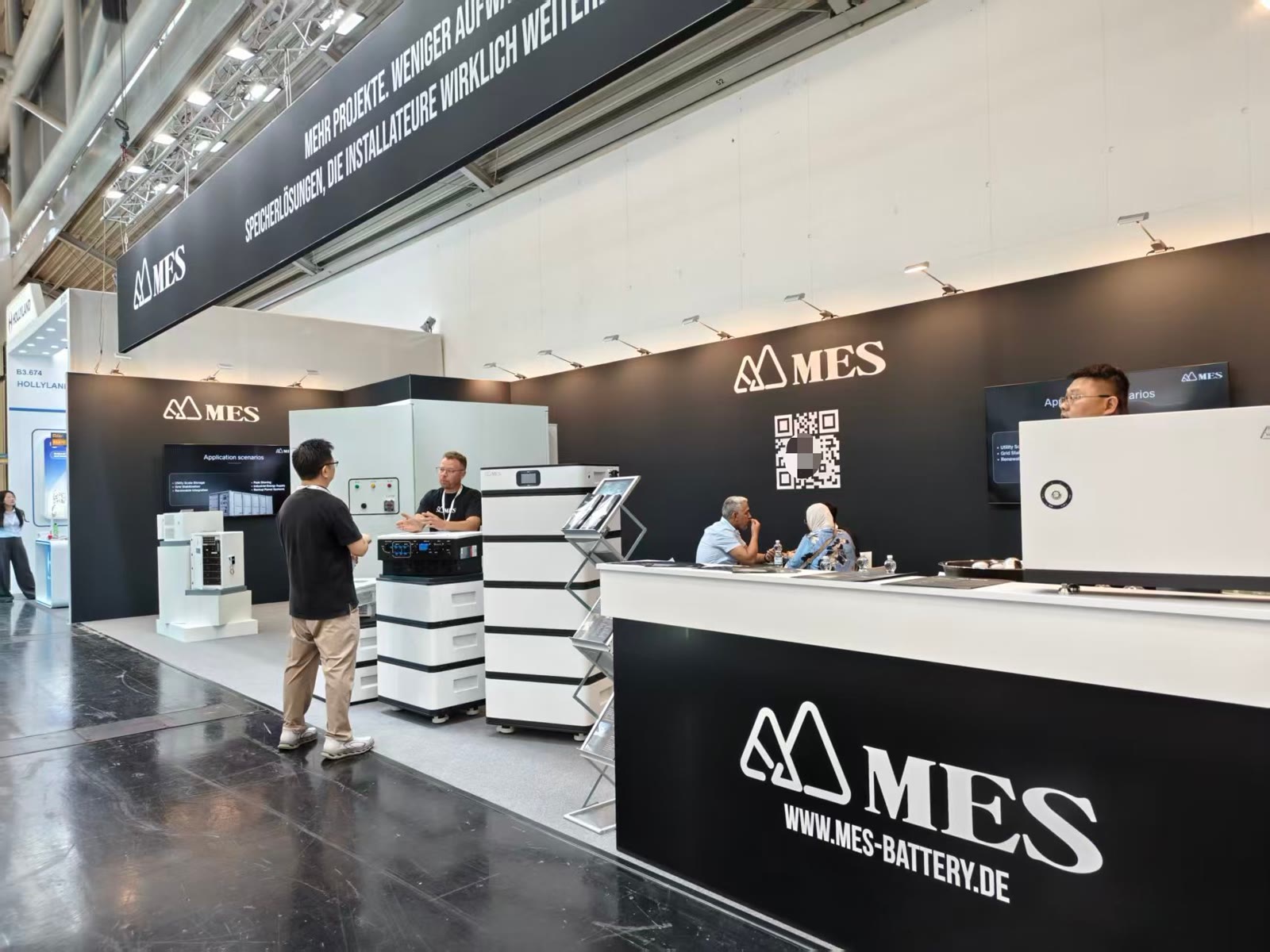
“Go to Germany. Go to the show floor.” That was one of FUJI Energy’s decisive outbound initiatives this year. On June 22, our Chairman Mr. Wang Pengfei and I flew together to Munich, attending Intersolar Europe 2026 — the annual barometer of the European solar and storage industry — and spent meaningful time at the booth of our German partner FSP, treating their stand as the “second field visit” of the trip.
I. Why Munich?
Intersolar Europe is one of the largest PV and energy storage trade fairs in the world, drawing exhibitors and buyers from more than 70 countries. For Chinese storage companies, it is not a place to “see the buzz” — it is a real-time window into the European market. Which battery chemistries grid operators are favoring, which inverter architectures comply with German local grid codes, which price ranges procurement teams are still genuinely considering — all of this is condensed into a few halls at Messe München.
Our objectives this year were explicit:
- Clarify Europe’s “special requirements”: Germany is not China. The bundle of VDE-AR-E 2510-50, IEC 62619, UN38.3, and the Battery Passport is the hard threshold for any European channel entry.
- Understand where our peers stand: especially Sonnen, BYD, Huawei, SolarEdge, and Enphase — the players that have already built a European channel ecosystem. Their product shapes, their app experiences, their warranty structures determine the homework we need to complete in the next three quarters.
- Reinforce FSP, our German partner: FSP is a true “co-traveler” in our European channel strategy. Our Chairman being personally at the booth is FUJI’s clear signal to the market: we are not a passing exporter — we are a partner investing in Europe as a primary battlefield.
II. Three On-Site Observations That Stuck With Us
Observation One — Battery Passport Becomes the Divide in 2026
2026 is the year EU Battery Regulation (EU 2023/1542) enters its deep-water execution phase. On the show floor, nearly every scaled exhibitor showed their hand on the Battery Passport: full material traceability of cells, carbon footprint declarations, renewable energy share at the manufacturing site, and end-of-life recycling paths — all queryable, audit-ready data.
Chinese brands with complete datasets held their pricing power; those without were already being filtered out by European distributors at the RFQ stage. This is a real “access gap,” not a price gap.
Take-away: EU Battery Passport is not “compliance for the future” — it is the active moat for the second half of 2026.
Observation Two — High-Voltage Stackable Home Batteries + 215kWh C&I Cabinets Are the Two Fronts
The two product forms dominating the floor: residential 5–30kWh high-voltage stackable batteries (typical module voltage 102V / 204V) paired with 10kW three-phase hybrid inverters; and commercial / industrial 100–215kWh all-in-one cabinets integrating PCS + MPPT + BMS, with outdoor enclosure, IP54, and remote O&M.
FUJI’s HV20 / HV30 / HV40 series map directly to the former, with strong acceptance of our 5–40kWh product line. The latter matches our FUJI-EBS 215kWh air-cooled cabinet — already shipping in multiple overseas projects. This means the 2026 product matrix does not need a major reshaping. The focus instead is: complete VDE reports for the HV series in Bulgaria and Greece; and build up customer case studies for the 215kWh cabinet across European channels.
Observation Three — Channels Strongly Prefer “Custom White-Label + 5-Year Local Warranty”
During the two days at the FSP booth, eleven European regional distributors and installers came up and asked the same three questions: Can you ship under my label? Can the warranty be extended to 5 or even 7 years? Do you hold spare-parts inventory locally?
Behind those questions is a repeatedly validated logic: Europe does not buy “a machine shipped from China.” Europe buys “a long-term partner who can answer me locally.” With China-Europe rail at 14 days and sea freight at 35–40 days, a 5-year warranty means nothing without a European local warehouse and local service network.
Take-away: The European channel winner profile is not “lowest price” — it is “strongest local presence.”
III. Two Small Moments at the FSP Booth
Spending two days at the FSP booth with Chairman Wang, two small moments stayed with me.
First: on opening day, a Dutch customer handed us a sheet — not a product spec, but a six-step after-sales service flow chart. “I want to see how you respond to my service call — not your spec sheet.” Our FSP colleague photographed it on the spot and forwarded it to our after-sales team — that flow later became the template for our European after-sales SOP.
Second: on day two, a Greek customer’s engineer, in mixed German and English, pointed at our HV40 nameplate and asked an extremely technical question: “Do your cells pass IEC 62619 §7.3.7?” Chairman Wang took the conversation directly in English and walked through our Battery Passport data point by point. He is not a battery engineer himself, but he had prepared thoroughly for certification-level questions — this is what the FUJI European team really looks like: data talks, not sales talk.
IV. The Four Things We Will Do Next
On the flight back to Shenzhen, we drafted a four-item checklist, now pinned on the showroom whiteboard:
- Complete VDE-AR-E 2510-50 reports for three HV-series models by end of September.
- Cover HV30 / HV40 and the 215kWh cabinet with EU Battery Passport data by end of December 2026.
- Set up Rotterdam and Hamburg spare-parts forward warehouses, with the first 50 units of the 215kWh cabinet on the ground by year-end.
- Co-publish with FSP a “European Channel Partner White Paper,” standardizing the seven evaluation dimensions European channels use when selecting a Chinese storage brand.
This is not a “we came back from the show” recap. It is a “we are setting off” checklist.
V. A Note to Our Peers
On the day we left Munich, in the airport departure hall, I wrote the following — partly as a note on this trip, partly as a note to myself:
Chinese energy storage going overseas is moving from a window-of-opportunity phase into a deep-water phase. In the window phase, everyone competed on price and delivery. In the deep-water phase, the competition is on: local warehousing, local service, local certification, local compliance, and local brand. From day one, FUJI has never treated Europe as “just another order” — we treat Europe as “a second home” we are building. This trip, going to the show floor with our Chairman, is the beginning of building that second home more solidly.
This article is also published on the FUJI Energy WeChat Official Account, LinkedIn, and the FUJI Energy Newsroom.
About FUJI Energy: Huizhou Fuji Energy Technology Co., Ltd. specializes in PV-Storage-EV-DC Grid-Forming Smart Microgrid, C&I energy storage, and residential energy storage products and solutions, serving EPCs, distributors, and installer networks worldwide.
Leave a comment